Posts

Showing posts with the label 3d medical rendering

Tips for creating stunning 3D architectural renderings
Image
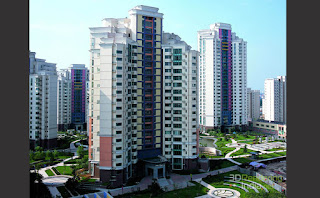
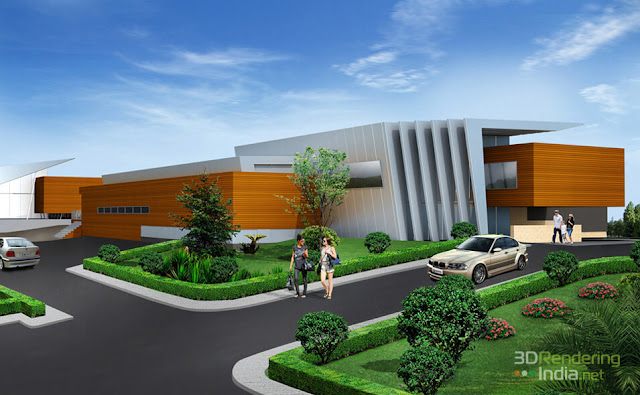
3D architectural renderings have become an increasingly popular tool for architects to show clients what a finished project would look like, in a more realistic way than using artist models or drawings. But for an architectural representation to be successful, it must be as photorealistic as possible. Here are some tips for achieving a higher level of realism in your 3d rendering . 1. Bevel its edges. Even on man-made objects, there are no perfectly sharp edges. By beveling its edges with a chamfer tool in the rendering software, it not only makes your rendering more realistic, but also brings out more detail by allowing the edges to capture reflections from your light source. 2. Do not use 100% black or white colors. To show that an object has volume, it must have halftone highlight and shaded areas for contrast. If you have a completely black virtual material, your model will be flat because the differences between the shaded areas and the mid-tones will not be visib...
Types of 3D Rendering in Highly Graphical Games and 3D Architectural Rendering Process

Image
3D rendering is a general model of converting a wireframe image from the 3D image into a 2D image with a respective photorealistic image or realtime renderings like an image taken from a camera, with different types of methods namely Rasterization, Ray Casting, Ray Tracing, and Rendering Equation. There is also a non-realistic framework namely polygon-based rendering service; as these are able to generate images from a second to several minutes or days on creating a single frame or scene. In the open market, we are facing challenges in selecting the right kind of 3D artists in making the required amount of input from their creative mind along with customer ideas. While we concentrate on the enhanced game which needs several 3D characters and environment then 3D rendering comes in hand with the need for high-end computers initiated with top module CPU configured along several GB of GPU installed in it. There is said that NVIDIA RTX powered ray-traced model engaged with creating an e...

THE POWER OF 3D ANIMATION and ITS USES

The term Animation extensively covers a wide assortment of types and applications. The least complex approach to separate it is into the classes of 2D and 3D movement. 2D animation regularly alluded to as vector movement. Projects like Macromedia Flash and Macromedia Director, Flash motion pictures, kid's shows, E-cards, and notice shorts are fine cases of Vector animation. 3D animation, nonetheless, is rendered in a virtual three-dimensional space, utilizing polygons caught by different virtual perspectives to make the movement. 3D animation has an assortment of utilization, from computer games to enlivened movies. Most normally, 3D animation is utilized to render a significant number of the embellishments seen in live-animation films, expelling the requirement for scale display sets or organized tricks. While the two sorts of animation can be expert by either outline by-outline liveliness or by numerical introduction between key casings, the underlying strides preceding vi...